

October 2026 Newsletter – Trick or Treat Origin Story
The exact phrase “trick or treat” is not ancient nor did it originate in the United States.
1927 Print Debut: The earliest known written record of the phrase appears in the November 1927 issue of the Blackie Herald newspaper in Alberta, Canada. It described costumed youth demanding “edible plunder” by using the words “trick or treat” while neighbors gladly complied.
The practice and the phrase trickled into the western United States throughout the 1930s but ground to a halt during World War II due to strict wartime sugar rationing.
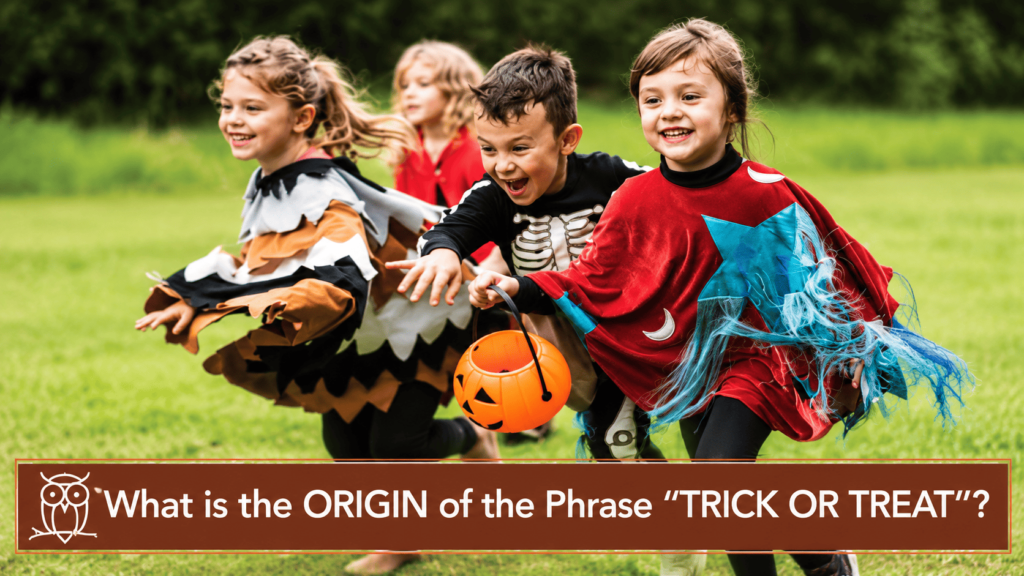
The 1950s Boom and Modernization
Trick-or-treating exploded into a national phenomenon after World War II, fueled by the postwar baby boom and the rapid growth of suburban neighborhoods.
Pop Culture Cementing: The tradition was fully locked into the American lexicon between 1951 and 1952. A 1951 Peanuts comic strip featured Charlie Brown’s gang practicing “tricks or treats,” followed immediately by the 1952 Disney cartoon Trick or Treat starring Donald Duck.
The Candy Takeover: Originally, kids received nuts, homemade baked goods, toys, or coins. In the 1950s, candy companies realized the massive financial potential and began aggressively marketing small, individually wrapped treats. Store-bought candy quickly became the standard because it was cheap, un-tampered with, and safe to accept from strangers.
Today, although some jurisdictions in the US forbid the activity for anyone over the age of 12. Dressing up is common at all ages; adults will often dress up to accompany their children, and young adults may dress up to go out and ask for gifts for a charity.